6 min read
Ironing vs steam pressing: what your clothes actually need
Why a hot plate leaves permanent shine on wool and dark trousers, what steam finishing does instead, and which of your clothes should never meet an iron.
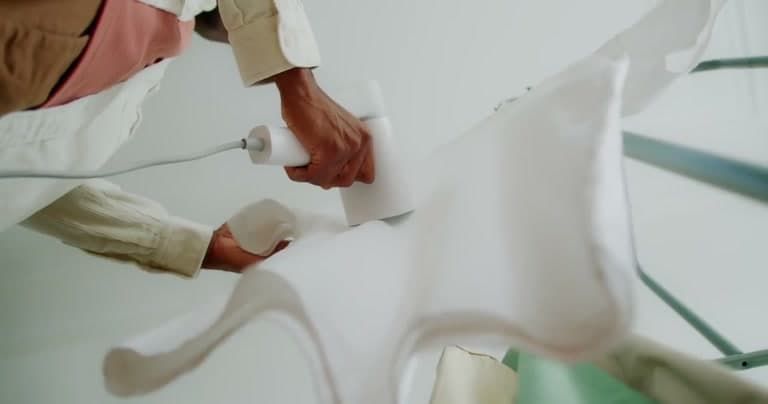
Most people use ironing and pressing to mean the same thing, and for a cotton shirt at home they effectively do. On anything else the two are different processes with different results, and the difference is permanent. It is worth knowing which one your clothes are getting.
What a domestic iron actually does
An iron flattens fabric between a hot metal plate and a hard surface. Heat relaxes the fibres, pressure sets them in their new position, and the crease disappears. That works because the fibres are being crushed flat, which is fine for a cotton weave that has nothing delicate about its surface.
The problem is what crushing does to fibres that have texture. Wool, silk and most synthetic blends have a raised surface that scatters light. Flatten it and the surface becomes smooth, smooth surfaces reflect light directly, and that reflection is what people call iron-shine. It is not a stain or a residue. It is the fabric permanently deformed, and no amount of washing brings the texture back.
What steam finishing does instead
Commercial finishing works the opposite way round. The garment is held under light tension on a form shaped roughly like a body, then hot air and steam are pushed through it. The steam relaxes the fibres, the tension holds the garment in the shape it is meant to have, and the air dries it there. Nothing presses down on the surface at all.
- Creases are removed by relaxing fibre, not by crushing it, so surface texture survives
- Collars, cuffs and plackets hold their line because they are shaped rather than flattened
- Pile fabrics and weaves keep the way they scatter light, so no shine develops
- Structure in a jacket shoulder is preserved instead of being pressed out
Which clothes suffer most from a hot plate
- Dark trousers, especially wool and wool blends — the first place shine shows
- Suit jackets and blazers, where pressing also flattens deliberate structure
- Silk shirts and sarees, where the sheen is the entire point of the fabric
- Anything with a raised weave, embroidery or zari work, which is crushed flat by contact
- Synthetic blends, which can glaze or even melt slightly at ironing temperatures
Plain cotton and linen are the exceptions. Both are fine under an iron, which is why the local ironing shop does a genuinely good job on a cotton shirt and why there is no reason to overthink everyday clothes.
What to ask for when you send clothes out
- Ask whether finishing is done on tension finishers with steam, or with a hot plate. It is a one-sentence answer and it tells you most of what you need to know.
- Say which garments you are worried about. A piece flagged at collection is routed differently from one that arrives in a bag of shirts.
- Say if something has already been ironed and gone shiny, so nobody makes it worse trying to fix it.
- For anything embellished, heirloom or structured, ask for it to be assessed individually rather than run through a standard line.
At Luxere, wash and iron includes the wash and then steam finishing on automated tension finishers, returned on hangers, from ₹69 per kilogram. Iron-only garments are handled alongside those orders — mention it when you book so the order is created correctly. Suits, silks and structured tailoring are better sent as dry cleaning, where the cleaning chemistry as well as the finishing is different.